That's what the report cards said. That's what the teachers told me. But when I looked at my son during a meltdown, screaming, throwing things, completely dysregulated, I didn't see a "bad kid."
I realized we were trying to force him to "focus" with stimulants, when his little body was actually stuck in "Fight or Flight" mode 24/7.
You can't focus when you are internally screaming.
We tried the standard meds. But treating the focus without treating the fear was a disaster. The stimulants made his anxiety go through the roof. He became even more irritable because we were revving up a nervous system that was already overwhelmed.
I felt stuck. I couldn't leave him unmedicated, he was drowning in his own emotions. But I couldn't keep medicating him with things that made him aggressive or "zombie-like."
I asked my husband,
"What if we stop trying to fix the ADHD, and just try to fix the Anxiety first?"
The Question I Wish I'd Asked Sooner
I started searching for anything that wasn't a stimulant. Most of what I found was either unproven or just as harsh.
Then I found a study comparing saffron to Ritalin in kids with ADHD symptoms. Saffron matched it on focus and mood, without the crash.
No appetite loss. No trouble sleeping. No flat, checked-out kid at the dinner table.
That was the first thing that made sense to me in months.
✓
Your child melts down over things that seem small, and afterward he can't explain why
✓
Report cards use words like "defiant" or "oppositional," but it feels more like fear than anger
✓
Stimulant meds made the meltdowns worse, not better
✓
You've caught yourself asking, "is he actually scared, not just acting out?"
✓
You keep waiting for the version of him that isn't fighting his own nervous system
His Nervous System Was Stuck On High Alert
What Fight-or-Flight Does
When a child's body stays braced for danger that isn't there, focus, sleep and mood all take the hit. Stimulants can push an already overwhelmed nervous system even further into that state.
What Actually Calms It
A nervous system settles when it gets support that works with it, not against it. That's the whole idea behind treating the anxiety first.
During a meltdown, none of that logic reaches him. He's not choosing to ignore you.
Fight-or-flight is the wiring under everything you see: the meltdowns, the trouble focusing, the mood swings. When it fires all day, everything built on top of it struggles.
His body isn't broken. It's doing exactly what a stressed nervous system is built to do, stay on guard.
What a nervous system stuck in overdrive actually looks like:
Meltdowns over small things. Trouble sitting still. Trouble falling asleep. Snapping at things that never used to bother him. The same stress response firing over and over with no real break.
Every one of those is a nervous system doing exactly what it thinks it's supposed to when it senses danger. Over time, it adds up to a kid who can't settle.
If a child's body is stuck bracing for a threat, no amount of asking him to "just focus" is going to reach him.
That's the part nobody warned us about.
⚠️ You can't undo months of a nervous system on high alert overnight. But you can start calming it down, one night at a time. That part is genuinely in your hands.
And The Usual Advice Doesn't Reach It.
A Stimulant Can't Calm What's Actually Scared.
Most advice for 'defiant' kids stops at behavior charts and consequences. All well-intentioned. None of it reaches a nervous system stuck in fight-or-flight.
❌ Stimulants target focus directly, but they don't calm the fear underneath it, and can actually make it louder.
The anxiety driving the meltdowns sits underneath the behavior. You can reward good behavior every single day and the fear stays exactly where it was.
Here's the part that caught us out. The meltdowns, the trouble focusing, the irritability all came from the same place: a nervous system that never got to feel safe. Treat the focus and the fear carries on underneath.
So you end up treating the symptoms while the real cause stays exactly where it was.
So What Actually Calms A Scared Nervous System?
The answer isn't complicated and it isn't new. It's been studied for years.
Give the nervous system something that calms it instead of stimulates it, every single day, and let it settle on its own.
First: something that works on the nervous system directly, not just the behavior sitting on top of it.
Second: the specific nutrients studied for calm and focus, things like saffron extract, GABA and passion flower.
The science is settled. The hard part has always been actually doing it every day.
A pill he fights you on. A supplement that tastes like medicine. Anything that feels like a battle, a tired parent stops giving.
So what do you reach for that actually calms him down and doesn't feel like another fight?
That's the thing we found that Tuesday. The thing that finally felt like it was working.
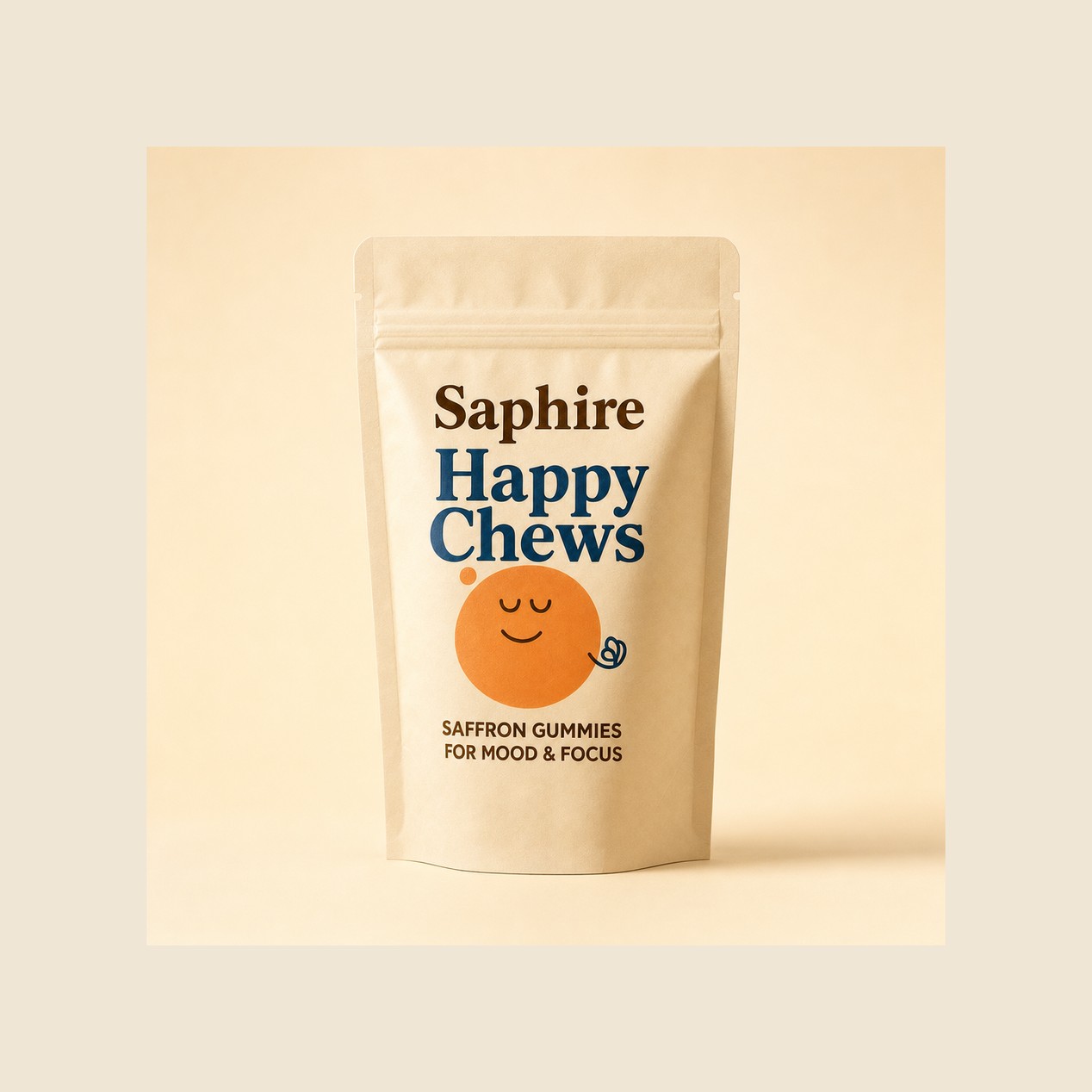
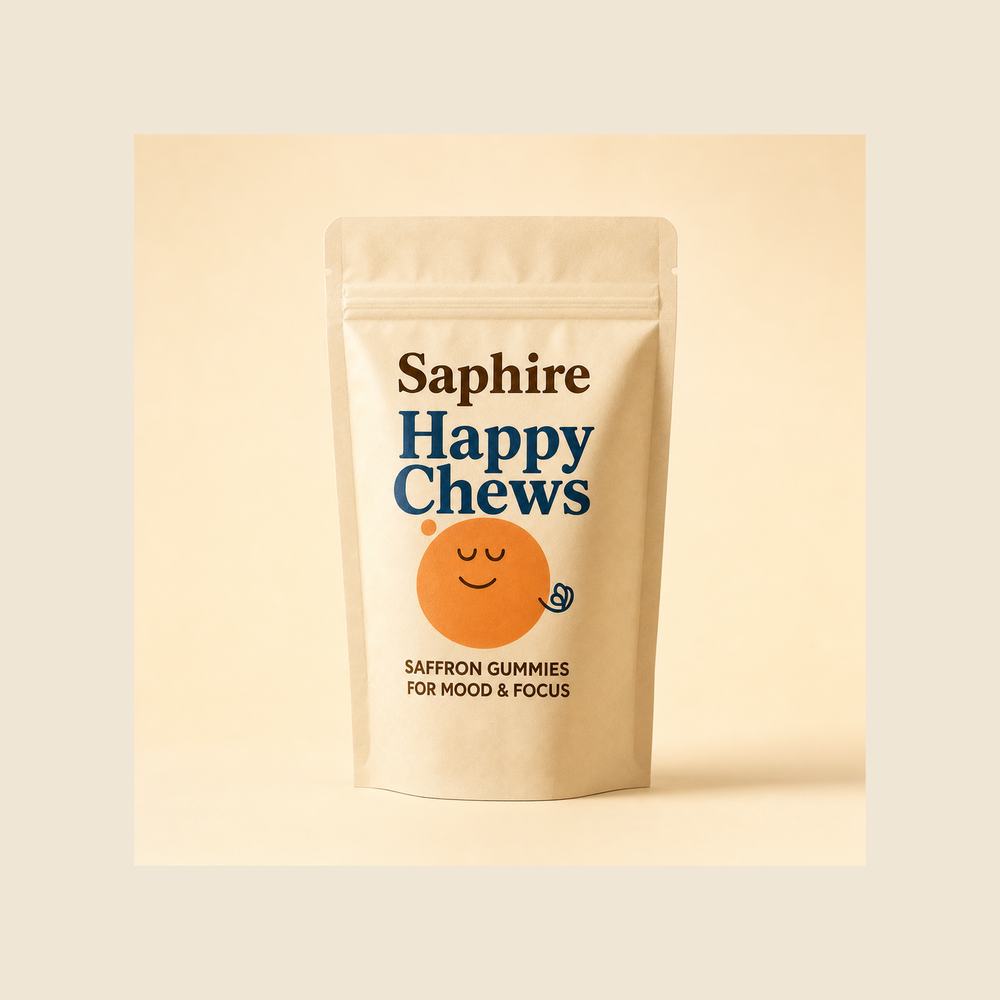
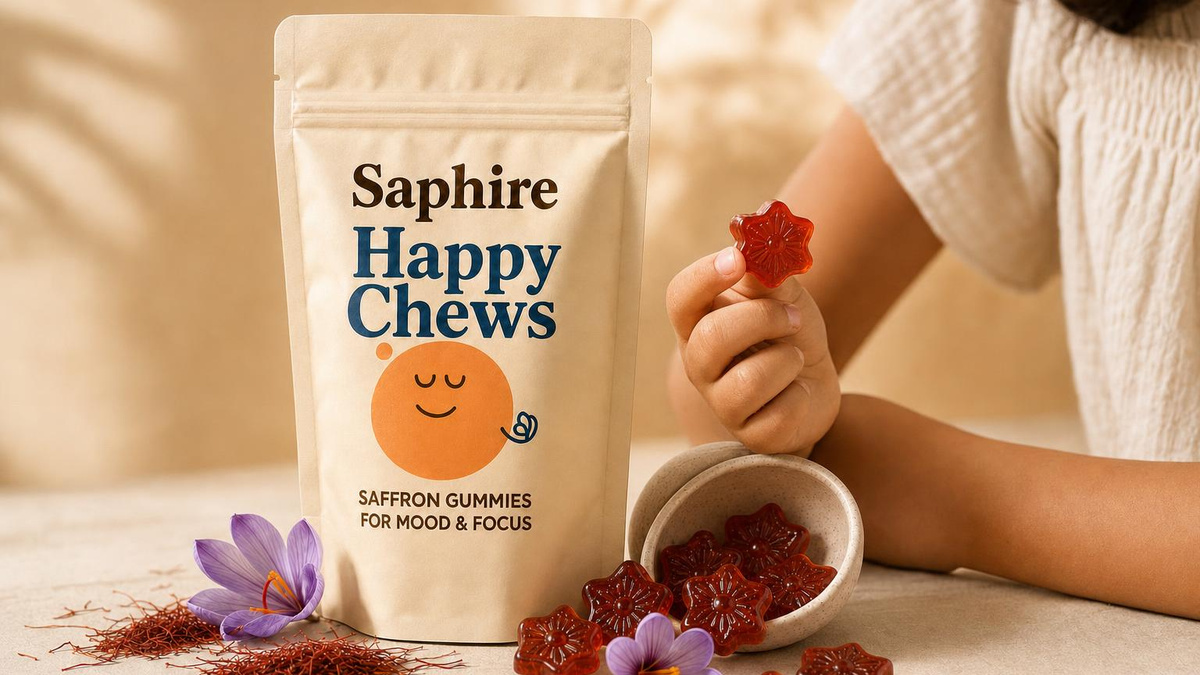
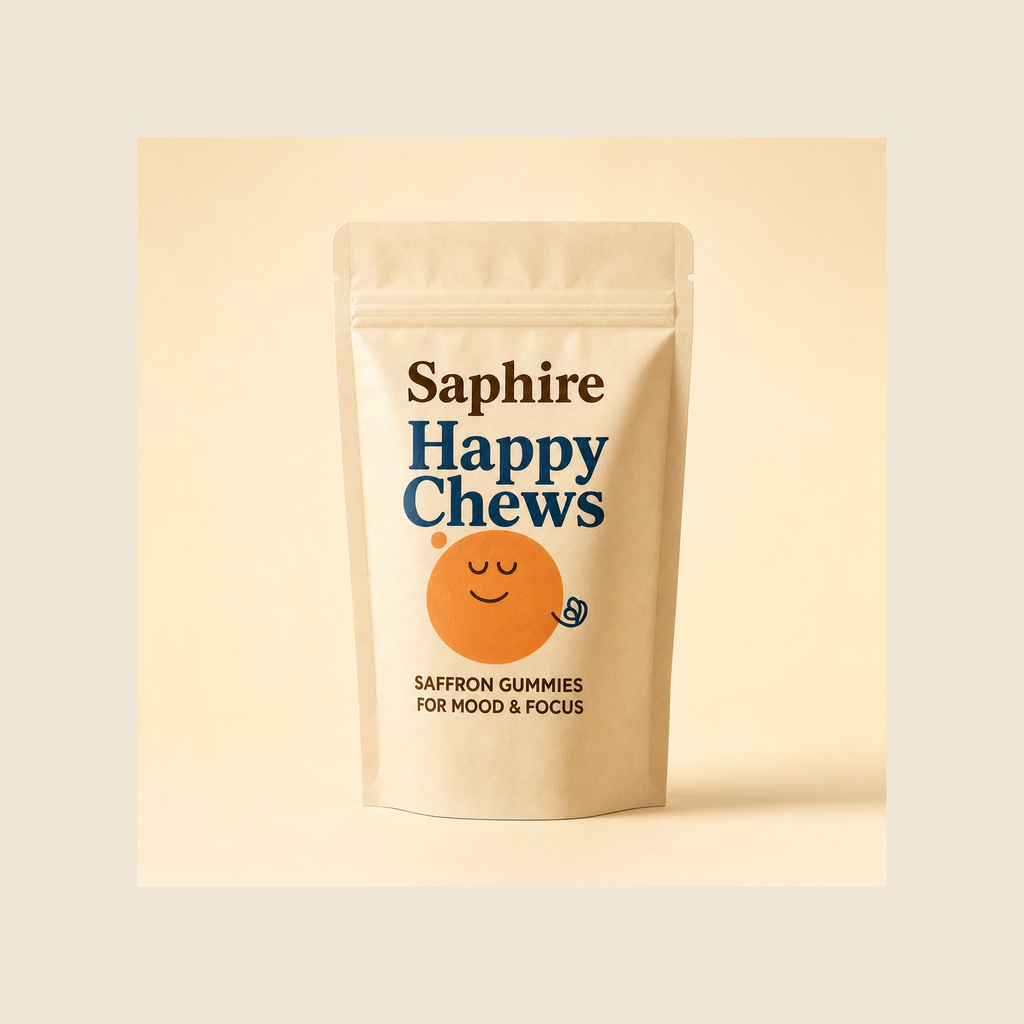
That's When We Found Saphire Happy Chews.
It wasn't a stimulant. It was a specific protocol of Saffron + GABA designed to soothe the nervous system, not stimulate it.
It targets the cortisol (the stress), not just the dopamine.
It does three things at once, and that's the whole point:
1. It gives him saffron extract, GABA and passion flower, studied to calm an overactive nervous system, not stimulate it
2. It's a gummy that actually tastes good, so it's not a fight to give him every morning
3. It gives you mornings that don't start with a battle
So mornings stop being something you brace for.
What's Actually In The Gummy
affron® Saffron Extract
The Main Calming Active
Clinically studied saffron extract shown to support mood regulation, focus and calm behavior, matching a common stimulant medication in published trials, without the stimulant side effects.
Sourced from premium Spanish saffron.
GABA
Your Child's Natural Calm Button
GABA is the neurotransmitter that helps turn hyperactivity into focused, settled attention.
Paired with saffron for a calming, non-stimulating effect.
Passion Flower, Magnesium & L-Theanine
For Steady Mood & Focus
Passion flower helps restless kids feel settled, magnesium eases physical tension, and L-theanine supports calm, steady attention without a crash.
Plus Vitamin D to support steady mood.
What's NOT in it:
No stimulants
No artificial dyes
Sugar-free
No appetite suppression
No sleep disruption
No "zombie" effect
No St. John's Wort
Made with Spanish saffron
Third-party tested
“I was terrified of putting my 6-year-old on ADHD medication. These gummies gave us the calm focus we needed naturally. Even his soccer coach noticed he's following directions better!”
Dave M.
Verified Buyer
“Homework went from 3-hour fights to 30 minutes of actual focus. My son can finally sit through reading time without getting up every 2 minutes. This is literally life-changing for our family.”
Susan B.
Verified Buyer
“I was at my wits' end with daily meltdowns. After just 2 weeks, my 7-year-old's teacher asked 'what changed at home?' because he was sitting still and participating in class. Finally something that actually works!”
Mary L.
Verified Buyer
What Changes When It Becomes Part Of His Morning
1
Within days:
First signs of calmer mornings. Less fighting to get out the door. He's not waking up already on edge.
2
Within 2-3 weeks:
The teacher says something, and it's not a complaint. He's sitting still longer, paying attention, getting along with other kids.
3
Within 3-4 weeks:
The meltdowns start fading. Homework doesn't end in tears. Bedtime isn't a battle. You enjoy dinner together again.
You Have 60 Days To See For Yourself. Completely Risk-Free.
Have Saphire Happy Chews every morning for a full 60 days.
If you don't see a difference, email the team and get every penny back.
No feeling worse for having tried. Fair enough?
And unlike a stimulant that wears off by afternoon, a daily gummy keeps supporting his nervous system all day, every day.
"Yeah, But..."
It isn't some unproven supplement off a sketchy website.
“Can a gummy really help with meltdowns?”
Yes, because it's real saffron extract at a studied dose, not a sprinkle for the label.
In a published clinical trial, saffron matched a common stimulant medication for improving mood, attention and anxiety in kids, without the stimulant side effects. The GABA and passion flower just make it something he'll actually take every morning.
“How is this different from a stimulant medication?”
Stimulants work directly on focus and can push an already anxious nervous system further into overdrive.
Saphire Happy Chews use saffron, GABA and passion flower to calm the nervous system first. No appetite loss, no sleep disruption, no "zombie" effect.
“Is it too late if we've already tried everything else?”
No. A nervous system can settle at any age when it gets the right support. You can't undo months of meltdowns overnight, but you can start calming things down tomorrow morning, and keep going. Many families notice a difference within a couple of weeks.
The difference: A stimulant pushes focus from the outside and can leave the fear underneath untouched. Saphire Happy Chews calm the nervous system first, so the focus that was already there can finally show up.
Saphire Happy Chews Helps Calm What's Actually Driving The Meltdowns
Option 1: Change Nothing
✓ The same daily meltdowns.
✓ The same stimulant side effects you're not sure about.
✓ The same promise that tomorrow will be calmer.
Option 2: Try Saphire Happy Chews
✓ One gummy at breakfast. A habit that actually sticks.
✓ Saffron, GABA and passion flower to calm the nervous system, not stimulate it.
The information provided on this page and in any linked materials is for informational purposes only. This page is hosted on a third-party domain and is not the official website of any product manufacturer or brand. Nothing on this page should be considered medical advice or a substitute for professional medical diagnosis, advice, or treatment. Always consult a qualified healthcare professional before starting any treatment or using health-related products.
Products mentioned or reviewed on this page may be sold by third parties. Their safety, effectiveness, and suitability may not have been evaluated by regulatory authorities, and results may vary between individuals. If you have a medical concern, consult your doctor or a qualified healthcare provider. Do not ignore professional medical advice or delay seeking treatment because of information found on this page.